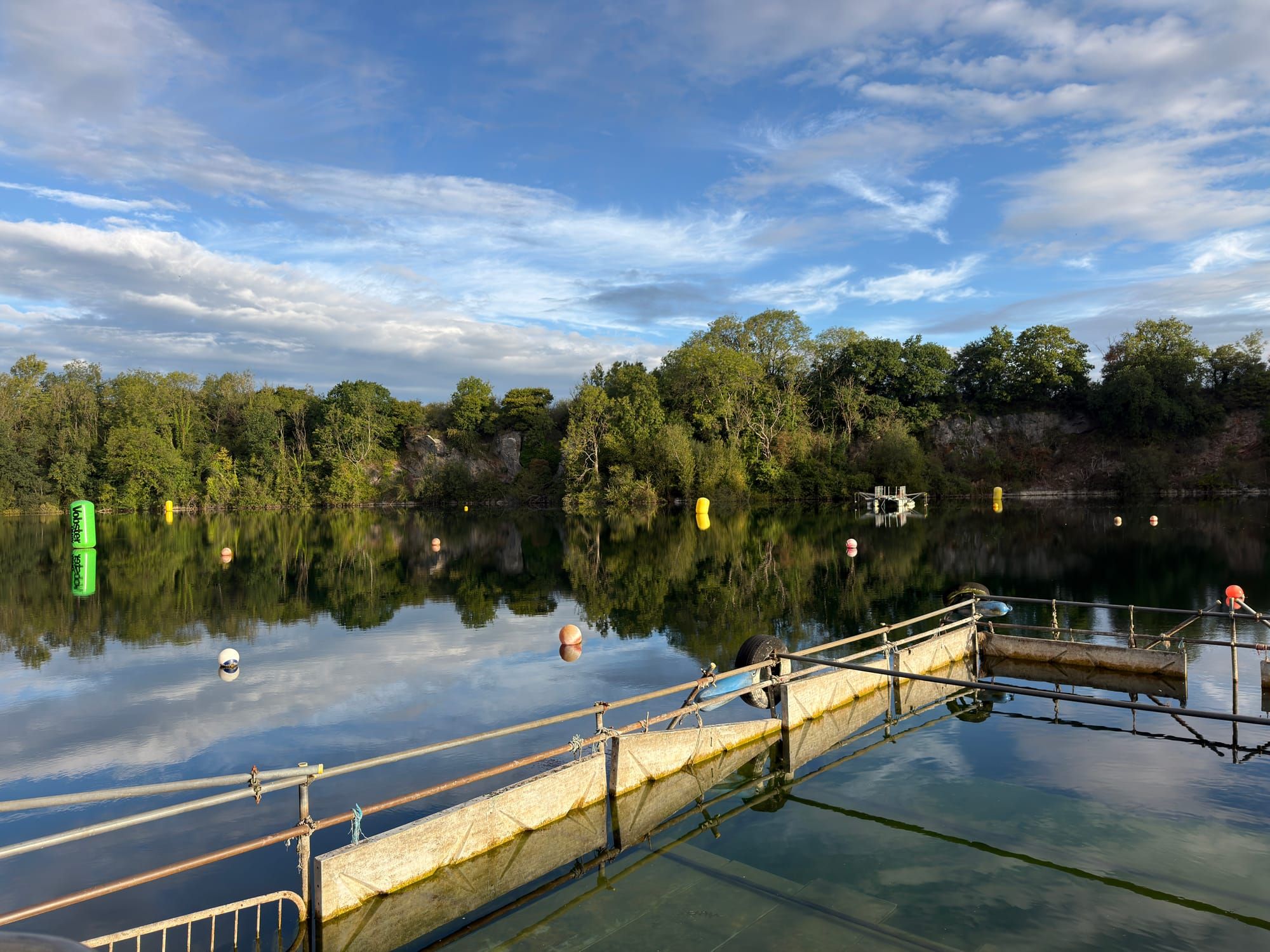
I recently completed my PADI Open Water Diver course with Abyss Scuba School. It was a great experience, helped enormously by patient instructors and a friendly group of people to learn with.
Before booking the course, I wanted to make sure I was comfortable breathing underwater and using the equipment. I did a Try Dive and then booked a second one to build my confidence before committing. Having that extra opportunity to get used to the experience was worthwhile for me, and by the end I felt ready to take things further. I'd recommend this approach.
Choosing a dive school
I chose Abyss Scuba School after looking at several options. Although it was over an hour away, it had some of the best reviews I found, and the team were the friendliest and most helpful when I made contact. I was happy to travel a little further to learn somewhere I felt comfortable.
That first impression carried through to the course. Joel and the team were patient, encouraging and supportive, which made a real difference when getting to grips with unfamiliar equipment and skills. I appreciated being able to ask questions and take the time to understand what I was doing.
What the PADI Open Water course involves
The PADI Open Water Diver course is an entry-level scuba qualification combining theory, practice in a pool or similar sheltered environment, and four open-water training dives. The theory covers the principles behind diving, including equipment, planning and safety procedures, while the practical sessions give you the chance to apply that knowledge with an instructor.
I liked that progression, with each stage building on the last. Abyss split the practical training into Part A in the pool and Part B in open water, which made the process feel manageable.
Part A: getting comfortable in the pool
The pool training took place at Abyss Scuba School, where we spent a couple of hours getting familiar with the equipment and working through the skills and drills. This built on the introduction I had gained during the Try Dives.
The practical training covers skills such as clearing water from your mask, using your regulator, controlling buoyancy and communicating through hand signals. It also includes safety procedures and working with a buddy. The emphasis is on practising with an instructor until you can demonstrate the skills, rather than simply watching someone else do them.
The pool gave me time to concentrate on those exercises and get comfortable being underwater with all the kit on before moving into open water.
Part B: a weekend at Vobster Quay
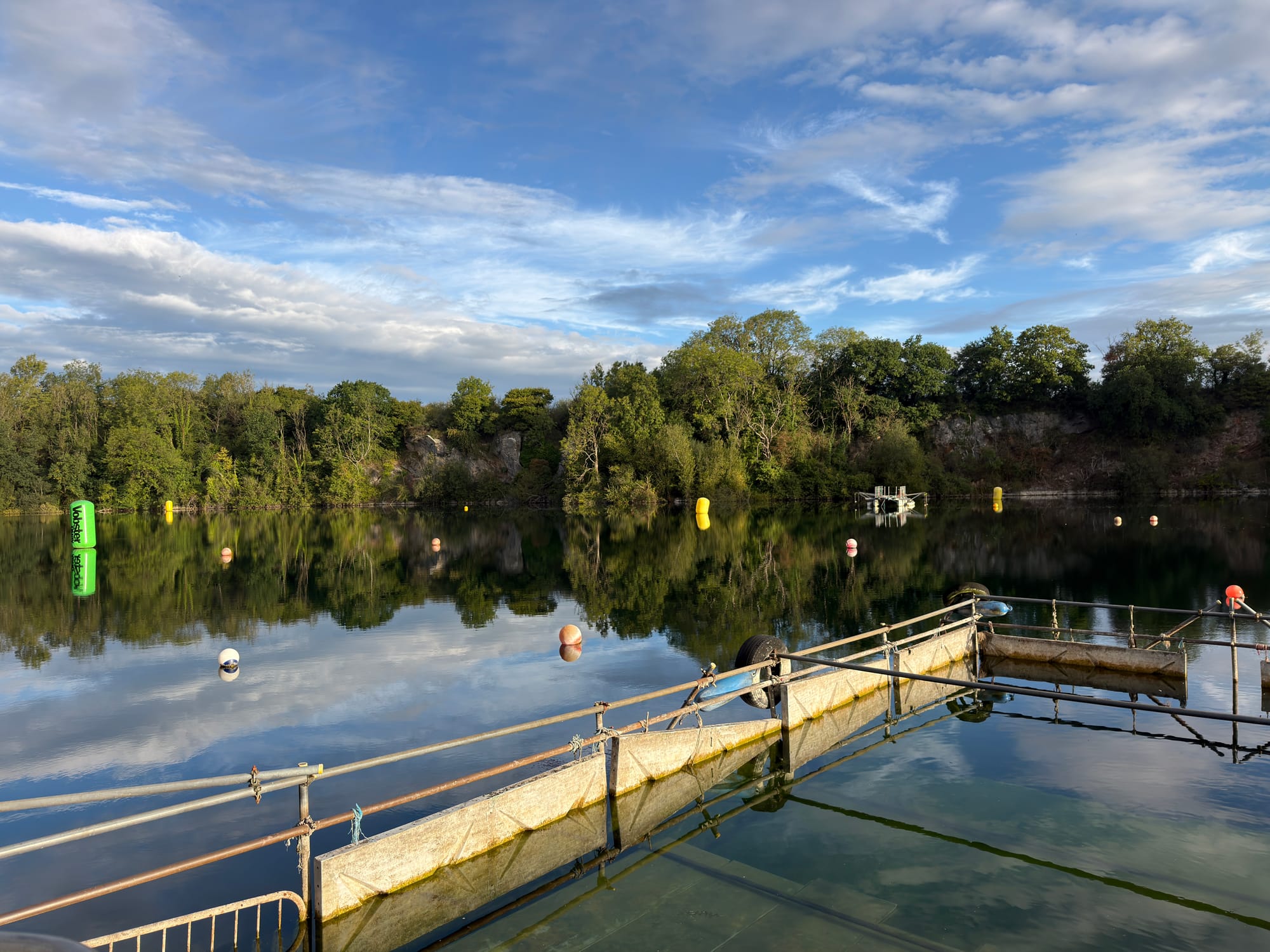
Our open-water training took place at Vobster Quay in Somerset. I decided to camp nearby, which made the weekend straightforward and saved travelling backwards and forwards each day. It was an easy way to stay close to the dive site and make a weekend of the course.
Day one: putting the pool skills into practice
We completed three dives on the first day, working through the skills we had practised in the pool. Across those dives, we spent around an hour and a half underwater and finished at about 4pm.
This was the part where the training started to come together. We were applying the exercises in open water while also keeping track of our equipment, our position and our buddy. Having already practised in the pool meant we had something familiar to build on, even though the setting was different.
Day two: the final qualifying dive
The second day began with our fourth and final training dive, which lasted around 35 minutes. The focus was on planning the dive and bringing together what we had learnt, rather than working through the same sequence of individual exercises. Completing it was a satisfying way to finish the practical side of the course.
The Open Water qualification means I can now dive with another qualified buddy to a maximum depth of 18 metres, while staying within my training, experience and suitable conditions. It gives me a starting point for recreational diving, but I am very aware that there is still plenty to practise and learn.
Our first buddy dive
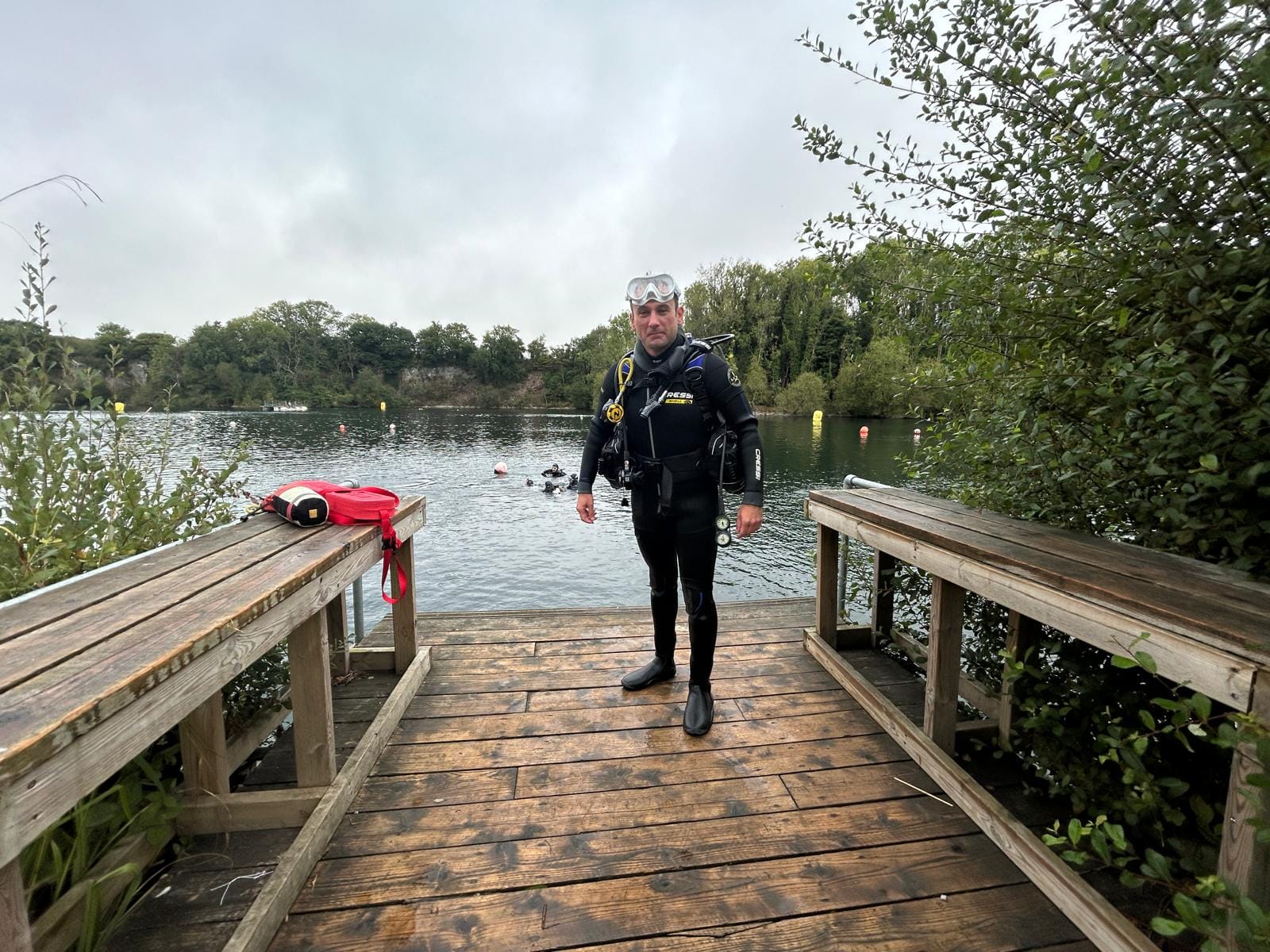
After finishing the course, we went back into the water for our first buddy dive. It was a lovely way to round off the weekend: an opportunity to enjoy a dive together and put the training into practice without working through an assessment.
It also helped me think about what I want to improve next, particularly buoyancy control and keeping track of everything underwater. I am looking forward to becoming more comfortable through regular diving rather than expecting everything to feel effortless straight away.
Having the equipment provided
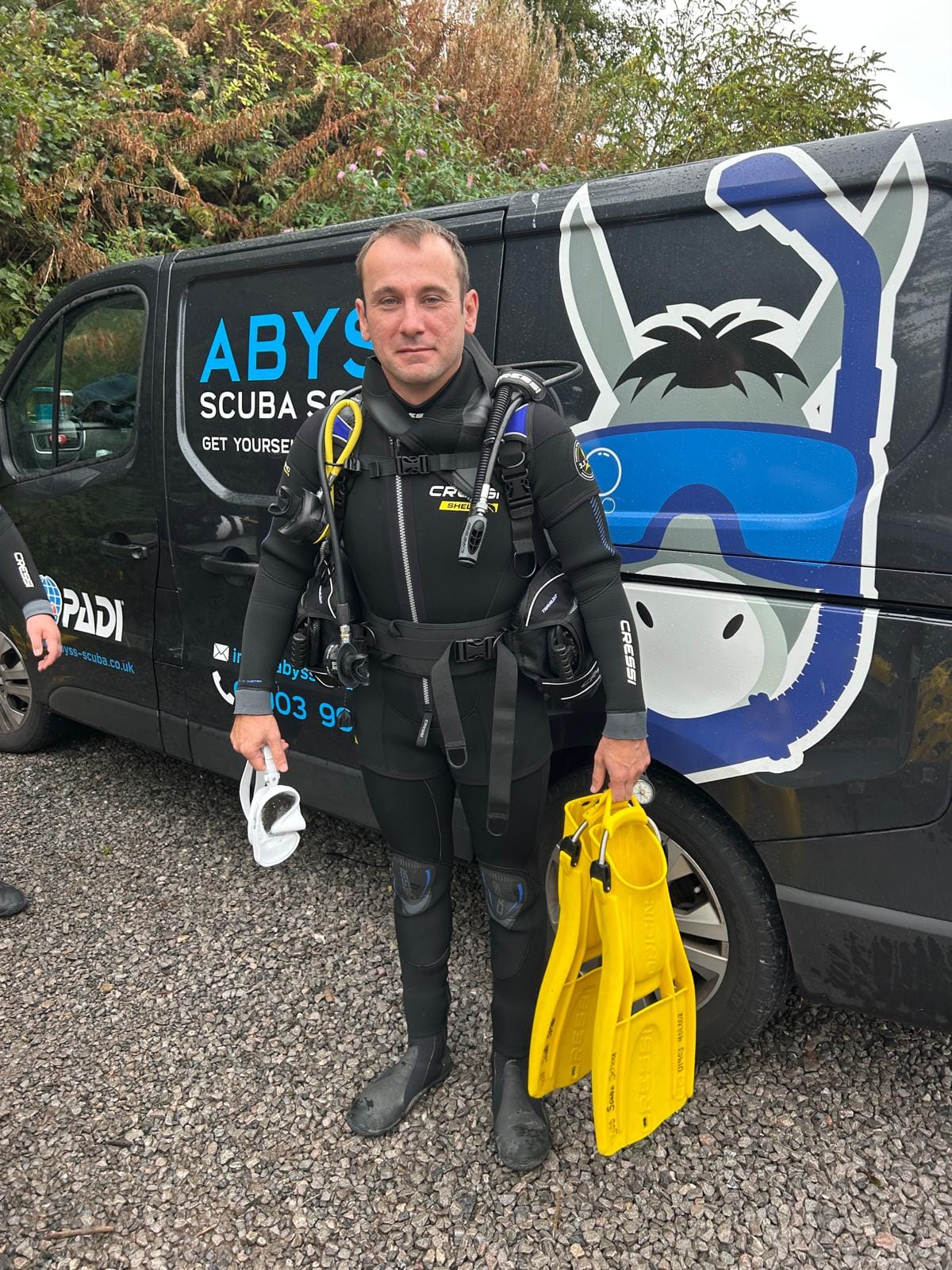
One thing I particularly appreciated was having all the diving equipment supplied for the course. There is a lot of kit involved, and being able to learn with the school's equipment meant I could concentrate on the training without needing to make a series of purchases beforehand.
I now have a better idea of how everything works together, and I can work out what I might like to own as I gain experience.
What comes next
My next step is to dive with the Abyss Scuba club and build on what I have learnt. I want to spend more time underwater, improve my skills and enjoy diving with people who have more experience. Further courses may follow, but I am in no hurry to move straight on to another qualification.
I am really pleased I decided to learn, and grateful to Joel and everyone at Abyss for making the experience so welcoming and enjoyable. I am looking forward to joining the club dives and getting back in the water.